Will Agents Kill the Software UI?
A plain-language take on a16z’s “headless software” discussion: when agents become users, the interface stops being the only door into the product.
If AI agents can finish work without clicking buttons or staring at screens, what happens to decades of user-interface design? That is the question behind a recent wave of talk about “headless software”: keep the data and logic, and stop assuming a human must sit in front of every screen.
Headless is not a brand-new invention
Amble’s opening point is deliberately deflating. Headless software is not new. APIs are not new. Many companies have exposed interfaces for years. When Salesforce announced Headless 360, much of what it marketed had already existed under quieter names. Relabeling old plumbing can sound bigger than the technical change underneath.
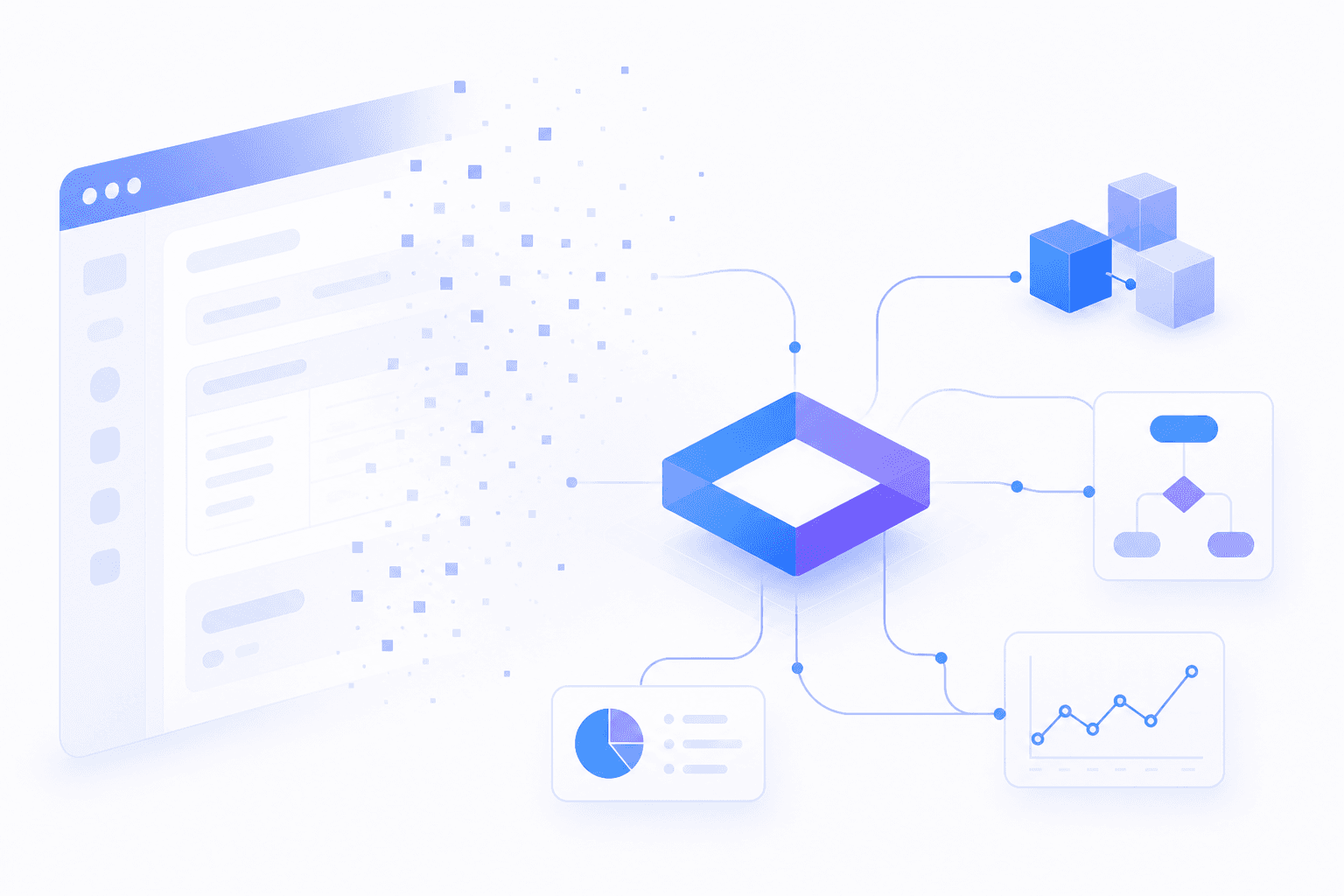
The interesting shift is not one product launch. It is who the software expects as a user. Traditional software is built for people: log in, click through a workflow, read a dashboard, finish a form. An agent does not need that choreography. It needs data, permissions, and a reliable way to get a result. For that kind of user, a glossy screen can become baggage.
Why the idea lands faster in some products
The conversation also points to Notion’s headless direction as a more natural fit. Its users already tend to be technical and willing to wire tools together. When the audience is already assembling agents, exposing the “body” of the product without forcing every action through a page feels less like a leap and more like catching up to how power users work.
That does not mean every product should throw away its screens tomorrow. Humans still need places to review exceptions, approve risky steps, and understand what happened. The sharper claim is narrower: the interface is no longer the only legitimate front door. Software increasingly has to serve two audiences at once—people who browse, and agents that call.
What is actually at stake
So the debate is less “will UI design go extinct?” and more “where does software value sit when the main operator may not be human?” If agents become common users, products compete less on which screen looks friendliest, and more on whether the underlying record, rules, and actions can be reached safely without theater.
For builders and buyers, the practical takeaway is simple. Keep investing in clear human experiences where judgment still matters. At the same time, treat APIs, permissions, and machine-readable workflows as first-class product surfaces—not as afterthoughts for integrators. Headless is not the end of UI. It is the end of assuming UI is the whole product.