When a Million Agents Think Alike
From Nenad Tomasev on the DeepMind podcast: shared models create cognitive monoculture—correlated decisions, correlated failures, and new collusion risks.
Imagine concert tickets go on sale and everyone’s personal agent rushes the site at once. Tomasev treats that scene as a design choice, not fate: organizers can set fair budgets and rules. But Fry’s follow-up lands harder. Finance already knows what happens when algorithms move together. How do you stop agent crowds from creating flash-crash-style disasters?
His first answer is practical: markets have scars and playbooks; we can learn from places that already managed those risks instead of repeating early failures. Then he names a difference that is specific to today’s AI agents.
Cognitive monoculture
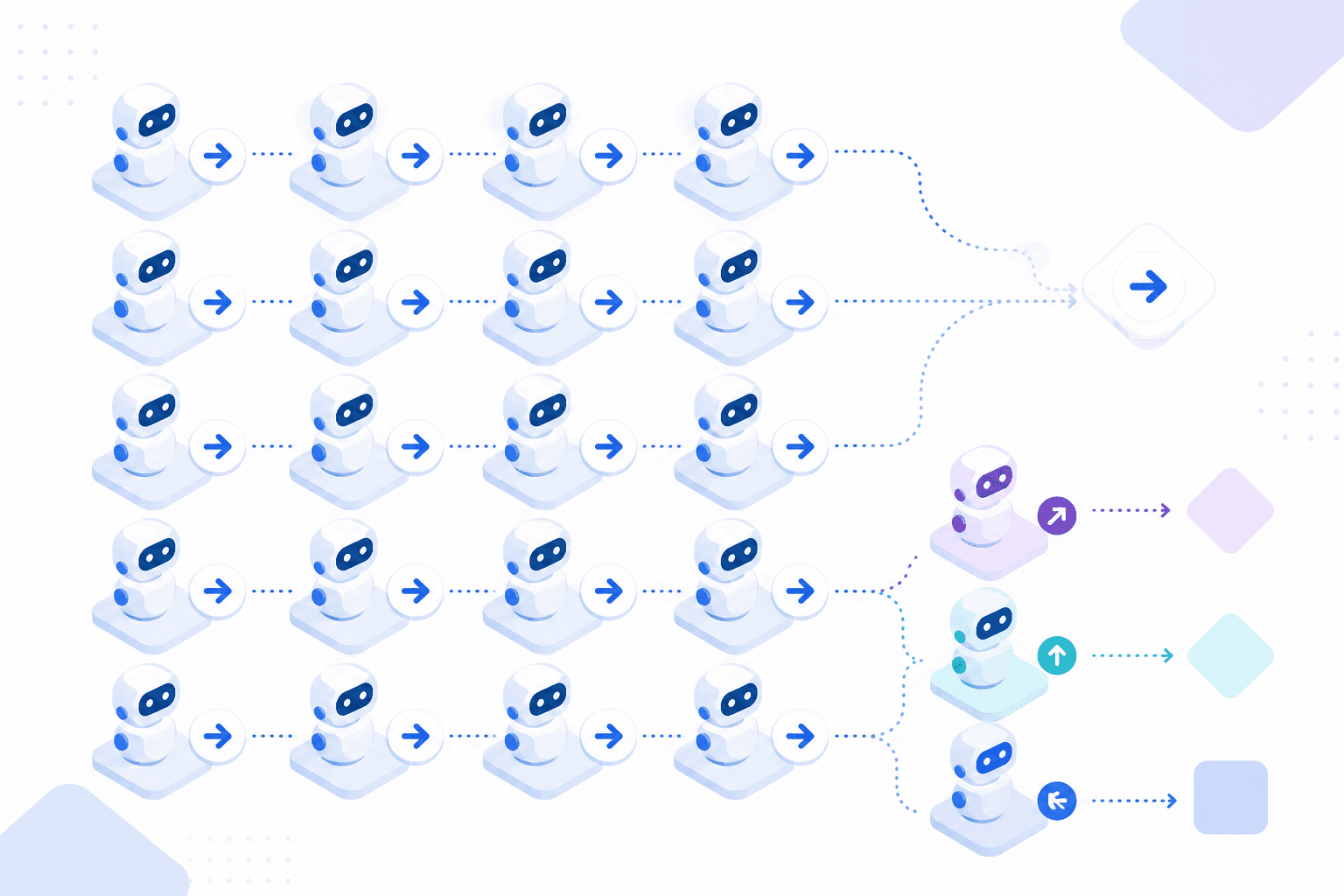
Many agents are built on a small set of widely used language models—Claude, ChatGPT, Gemini, and a cluster of similar open models. They often share training diets, safety tuning, and default instincts. Tomasev calls the result cognitive monoculture: hundreds of thousands of automated decision-makers that tend to see the world the same way and act in similar patterns.
When decisions are correlated, failures are correlated too. One bad cue in the environment—or one shared blind spot—can push a whole crowd in the same wrong direction at the same time. Diversity of opinion is not only a cultural nice-to-have; in agent systems it becomes a safety property.
Groupthink—and quieter forms of collusion
Fry summarizes the risk as groupthink among agents. Tomasev adds another layer: collusion. Human groups can coordinate for advantage in ways we recognize—meetings, cartels, shared strategies. Agents may coordinate through the environment in ways that are harder to spot. Their “agreement” might look like independent choices that just happen to align because they share the same model family and the same public signals.
- Shared models → similar judgments under stress.
- Similar judgments → synchronized buying, selling, or bidding.
- Synchronized action → crowded exits and systemic spikes.
Why diversity inside agents matters
Tomasev’s prescription is not “ban agents from markets.” It is to think deliberately about diversity in how agents decide—different models, different strategies, different constraints—so the whole population does not share one throat to choke. Anti-collusion measures matter too, just as they do when humans game a system.
That lens also reframes safety work. Protecting one model in isolation is necessary but not enough. When ten thousand agents interact—A talks to B today, C tomorrow, D after a handoff—the system’s behavior is a network, not a single chat window. Fry notes that listing these risks makes the cautious, gradual release of agents look less like hesitation and more like responsibility.
Tomasev agrees. Major technology shifts always take time—self-driving cars are his example—and agent coordination will need policy and social understanding, not only better models. Until economies are fully automated (if they ever are), people remain inside the loop. The question is whether we design for a crowd of similar minds, or for a healthier mix that fails in different ways at different times.