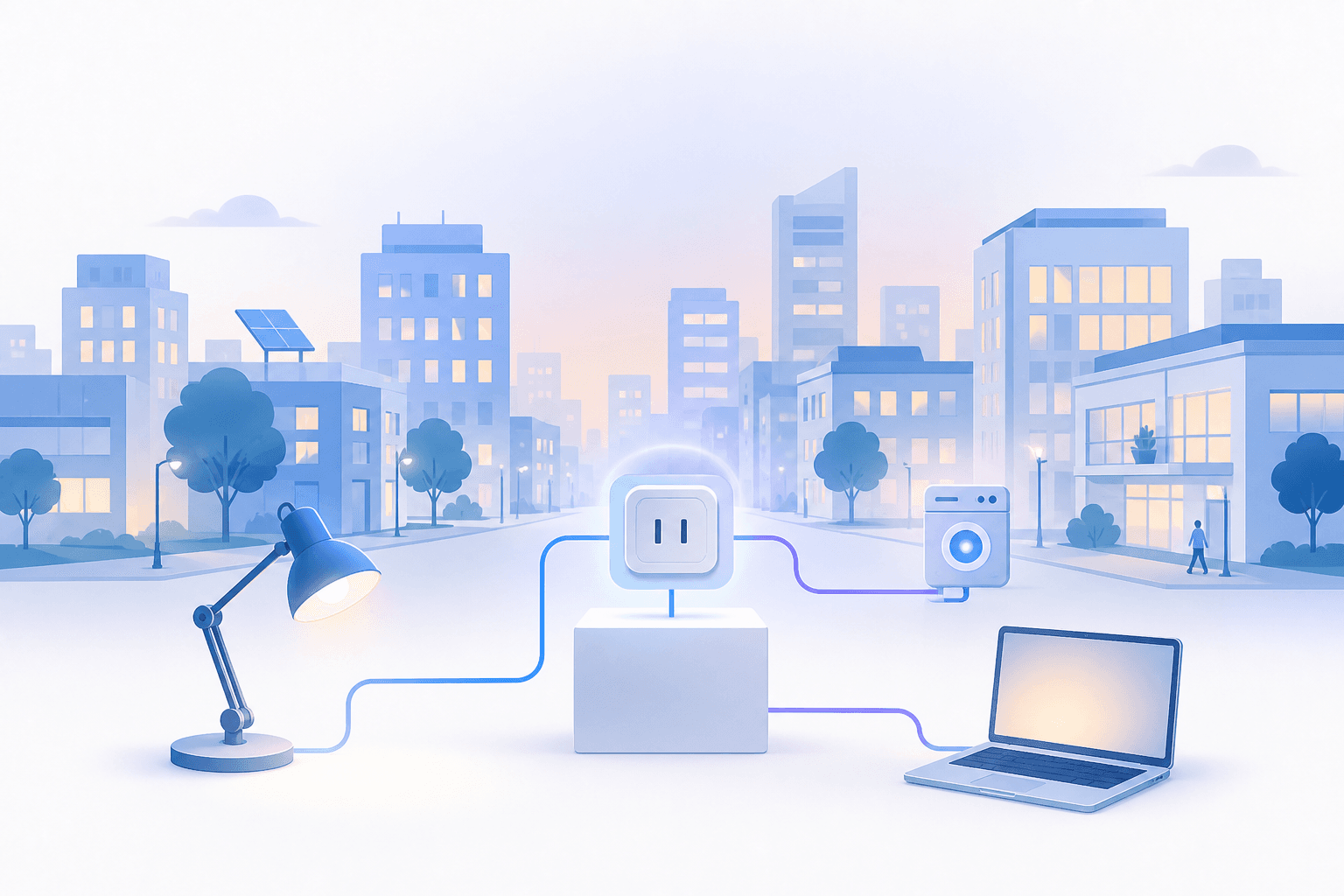
AI Is Becoming a Utility—But Users Aren’t Buying “Intelligence”
From Sam Altman’s Stanford roundtable: early electricity sold night lighting, not “power.” AI may become infrastructure like water and electricity—once we find the right everyday promise.
Silicon Valley often explains AI with phrases like “AI intern” or “AI employee.” Inside the industry, that shorthand is useful. Outside it, many people without a technical background still struggle to picture what they are supposed to buy—or why it matters.
In the Stanford conversation, Altman offered a clearer frame: AI is becoming a new kind of utility—closer to electricity, water, or the internet than to a single app. The hard part is not only building the technology. It is finding language ordinary people can feel.
Early electricity did not sell “power”
Altman has looked at the history of electricity’s spread. The early companies, he notes, did not lead with “we sell electricity.” Many households did not know what electricity was. Some feared wiring it into the home.
So they sold a result people already wanted: night lighting. Buy this, and you can read and work after dark. They might mention that electricity would later wash clothes or drive machines—but few believed that yet. The product people paid for first was light they could use tonight.
AI marketing often sounds like the opposite: companies talk about selling intelligence or compute. For most users, that creates little resonance. Altman admitted he still does not know what AI’s “night lighting” is—the one everyday scene that makes the value obvious enough to pay for. What he does believe is the end state: AI becomes infrastructure every company and person plugs into.
Compute and tokens are not the same layer
People sometimes call compute a utility, and sometimes call tokens a utility. Altman’s distinction is practical. Compute is the hardware layer—chips and servers. Tokens are the unit of service users can actually feel: how much you pay per call, how fast it responds, how good the result is.
Most customers should not need to care which chip sits in which data center—any more than you study base-station equipment when you pay a phone bill. You care whether the signal is steady and whether you have enough usage. Over time, even tokens may fade from daily conversation. As agents become common, people may simply pay for the finished service, the way few people obsess over every megabyte of mobile data today.
Why inference may be the quieter prize
If intelligence is to be as easy to use as electricity, training breakthroughs alone are not enough. Delivery matters. Asked where a one-person frontier lab should focus, Altman pointed to inference: making already-trained models cheaper and faster to serve.
His reason is industry shape. Huge resources go into larger models and better training. Far less energy goes into serving those models well. His bet: once model quality is high across many labs, competition shifts to who can drive the cost of intelligence lowest and keep supply abundant. Inference is the grid and distribution system. Brilliant generation without efficient delivery does not reach households.
- Training races raise the ceiling of capability
- Inference races lower the price of using that capability every day
- For smaller teams, delivery and cost may be a more reachable entry point than frontier training
What this means if you are not building models
You do not need to wait for the perfect metaphor before using AI. But Altman’s electricity story is a useful filter: users buy outcomes, not abstractions. “Smarter model” is an abstraction. “Finish this report before dinner,” “answer customers overnight,” or “keep the lights of work on after hours” are closer to night lighting.
The long-term picture he sketches is not a single killer app forever. It is AI as something you stop noticing—because it is wired into how companies and people get work done. The companies that win may be the ones that make that wiring cheap, reliable, and easy to explain.